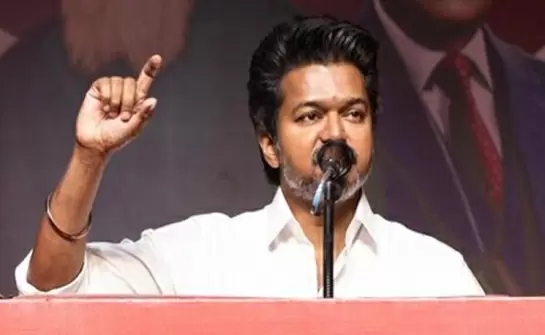

Beyond GDP Headlines: Education, Ethics and Inequality Take Centre Stage at The Weekend Leader–VIT Awards
TWL Bureau
| Chennai
06-January-2026
Vol 17 | Issue 2
The Weekend Leader–VIT Lifetime Achievement and Business Luminary Awards, held recently at the Vellore Institute of Technology (VIT) Chennai campus, evolved into a wide-ranging and candid conversation on India’s growth story, its contradictions, and the role of education, ethics and social responsibility in shaping the country’s future.
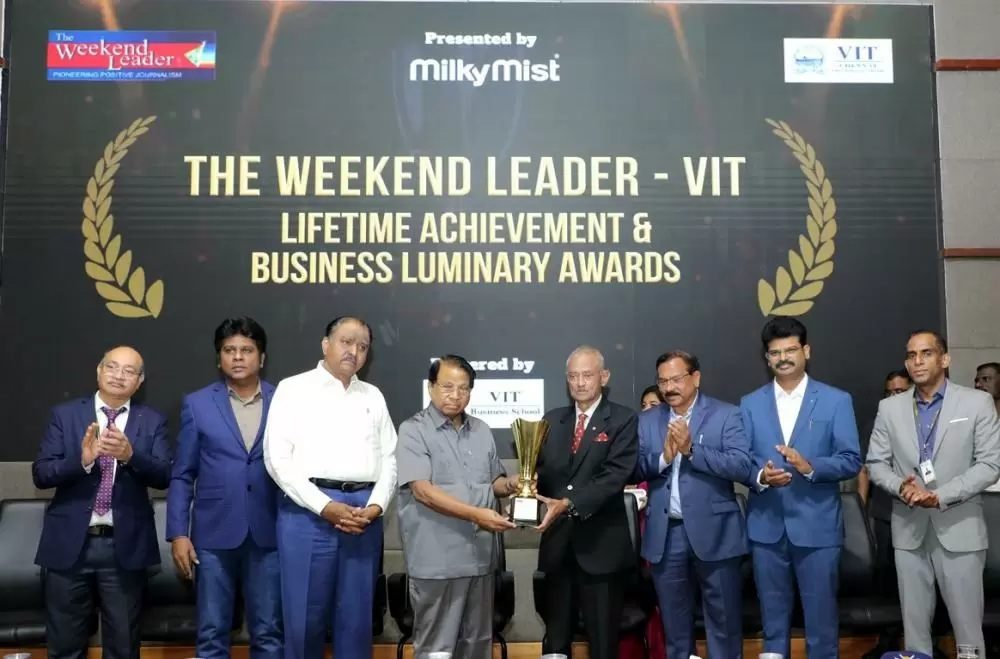
| Dr. G Viswanathan, Founder-Chancellor, VIT presenting The Weekend Leader - VIT Lifetime Achievement Award to Brigadier B K Ponwar (Photos: Bosco) |
Dr G. Viswanathan, Founder-Chancellor of VIT, and Shankar Bidari, former Director General of Police, Karnataka, presented the awards jointly to Brigadier B. K. Ponwar, who received the Lifetime Achievement Award, and Ma Foi K. Pandiarajan, Executive Chairman of CIEL HR Group, who was honoured with the Business Luminary Award.
While the occasion celebrated individual achievement, the awards function itself turned into a searching reflection on where India stands today and what must change for real progress.
‘We are celebrating GDP, but ignoring per capita income’
Taking the discussion to a broader economic and structural level, Dr G. Viswanathan delivered a speech loaded with data and questioned India’s tendency to celebrate headline economic milestones without examining the underlying realities.
“India recently overtook Japan to become the fourth-largest economy in the world,” he said. “But when you look at per capita income, our ranking is around 140 globally. Japan’s per capita income is nearly twelve times ours.”
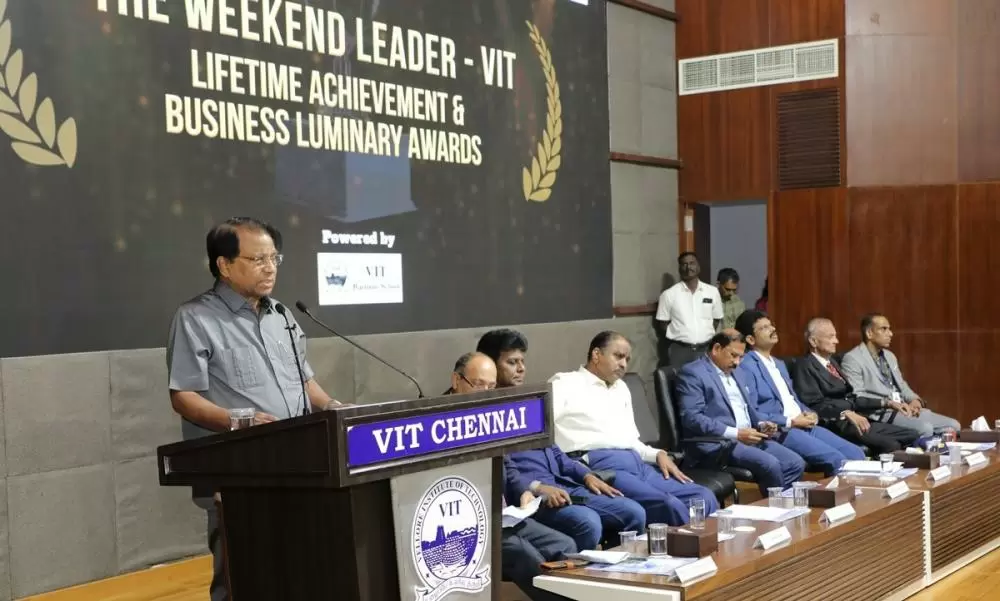
| VIT Founder-Chancellor Dr G. Viswanathan focused on education-led growth and India’s economic future |
“Our per capita income is around $2,900,” he said. “Japan’s has crossed $36,000. These are the issues young people must understand.”
Dr Viswanathan cautioned that growth in India remained uneven and unequal. “Ten percent of the population controls nearly eighty percent of the wealth of this country,” he said. “This has to change.”
Education is the decisive factor
Returning repeatedly to education as the foundation of sustainable growth, Dr Viswanathan said, “Wherever education levels are higher, per capita income is higher. There is no exception.”
Drawing a striking comparison, he noted, “California is just one among 50 states in the US. Its population is only about four crore, but its GDP is almost equal to that of India, which has 146 crore people. How is this possible? The answer is education.”
He pointed out that California’s higher education enrolment stood at nearly 88 percent, while India’s Gross Enrolment Ratio (GER) remained at around 28 percent.
“We are very backward in higher education because governments, both at the Centre and the States, do not spend enough,” he said. “Higher education in this country depends largely on parents.”
Sharing data from VIT itself, he said, “At the Vellore campus, out of 44,000 students, only about 700 receive government support. Any welfare state must invest in education and health.”
Remittances, States and inequality
Dr Viswanathan also highlighted how education shaped migration and remittance flows. “Indians are working all over the world,” he said. “VIT students are present in 84 countries.”
“In 2024 alone, India received around Rs 12 lakh crore in remittances,” he noted. “Kerala, Tamil Nadu and Maharashtra together accounted for nearly fifty percent. Again, the reason is education.”
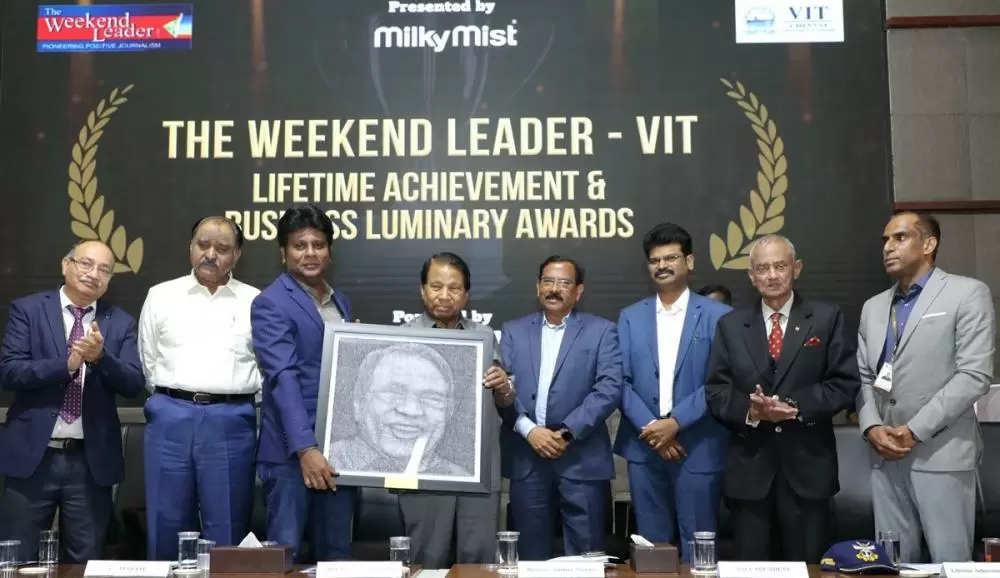
| P C Vinoj Kumar, Editor of The Weekend Leader, presents a thread art portrait to Dr G. Viswanathan |
Comparing States, he said, “Kerala’s per capita income is about $3,800, Bihar’s is around $810. Tamil Nadu’s is about $5,400, Uttar Pradesh’s around $1,500. The national average is $2,900.”
“These differences are not accidental,” he said. “They are the result of education levels.”
Three national diseases
Dr Viswanathan spoke about what he called three national diseases, referring to tax evasion, black money and corruption. “Due to tax evasion, we lose around Rs 8 lakh crore every year. Due to corruption, another Rs 6 lakh crore.”
“Black money is difficult to calculate,” he added. “Some say twenty percent, some say thirty percent, some even say fifty percent.”
Calling upon the media to act responsibly, he said, “Truth is becoming very difficult to find. I request The Weekend Leader to help people understand what is true and what is false.”
Shortcuts will never work
Echoing many of these concerns, Dr Shankar Bidari addressed students on integrity, unity and discipline.
“The shortest distance between two points is always a straight line,” he said. “Shortcuts will never work.”
“The only path to success, happiness and glory is the straight path - the path of truth and righteousness,” he said.
On national identity, Dr Bidari said, “Whether your language is Tamil, Telugu, Kannada or Marathi, whether you are Hindu, Muslim or Christian, we must always think Indians first, Indians first, and Indians first.”
Respect parents, build families
In a deeply personal appeal, Dr Bidari urged students not to neglect their parents. “There is no greater God than your mother and father,” he said.
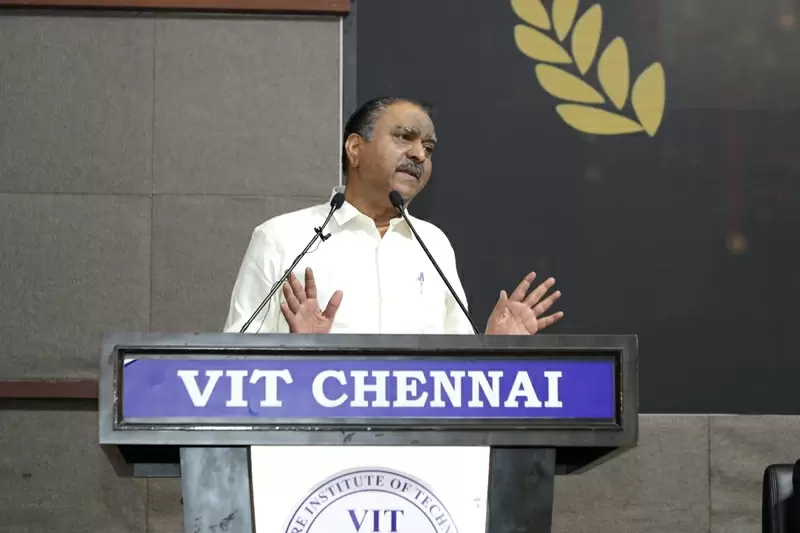
| Dr Shankar Bidari, former DGP of Karnataka, shared insights on leadership, discipline and values |
“You don’t need to go to temples or pilgrimages,” he added. “Go to your parents. Touch their feet. Take care of them.”
“A country is nothing but a collection of families,” he said. “If families prosper, the country will prosper.”
Giving back to society
Setting an important moral and social context for the event, G. V. Selvam, Vice-President, VIT, urged students to look beyond personal success and reflect on their responsibility towards society.
“At some point, everyone wants to get a job and settle in life,” Dr Selvam said. “But after that, what is next? Giving back to society, that is very important.”
Referring to a recent interaction with a foreign visitor, he recalled, “Yesterday, we had a guest from the United States. He told me, ‘Earlier, I thought India was a very poor country.’ Then he realised that some of the richest people in the world are actually in India.”
However, Dr Selvam pointed out that personal wealth did not automatically translate into social contribution. “You can check the donors’ list. Names like Adani or Ambani are not there,” he said. “But Shiv Nadar from Tamil Nadu (founder of HCL Technologies) is the highest donor in India. On an average, he donates around Rs 6 crore every day.”
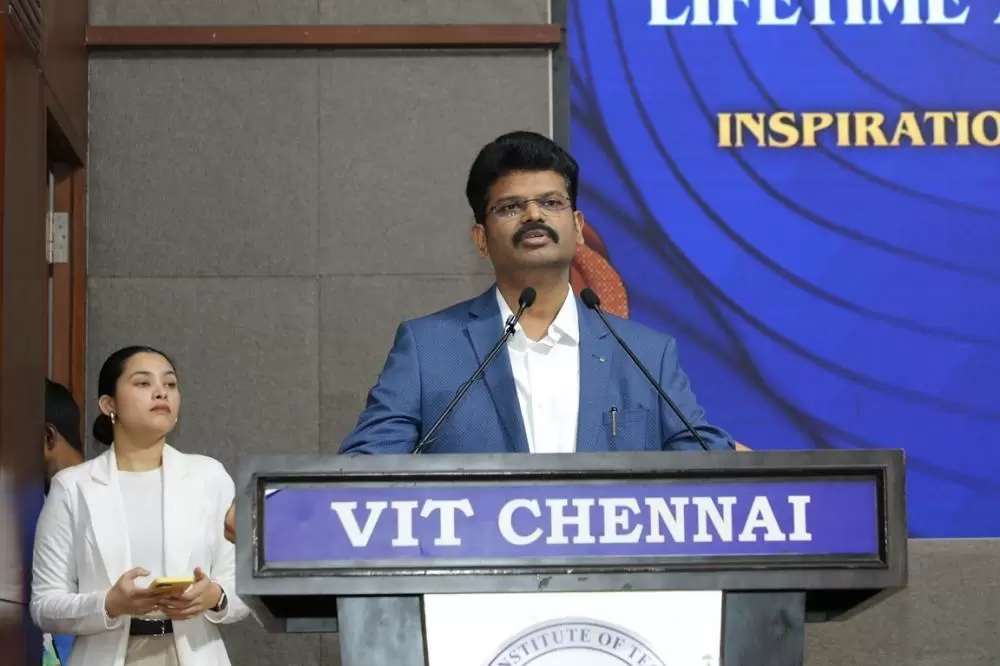
| Dr G. V. Selvam called on the younger generation to think beyond careers and contribute to society |
The emphasis, he stressed, was not on the quantum of giving, but on the mindset. “You should have the heart to give. Whether it is Rs 6, Rs 600 or Rs 6,000, it does not matter. What matters is the willingness to give.”
Dr Selvam made a direct appeal to the younger generation. “I request this generation to seriously think about giving back to society,” he said. “That is how a nation moves forward.”
There can be no valour without vision
In his introductory remarks, P Vinoj Kumar, Editor of The Weekend Leader, described the dais as because of the sheer impact that the dignitaries seated there had made on society.
“The combined impact of the people seated here has touched tens of thousands of lives across the country,” he said.
Referring to the theme of the event, he said, “There can be no valour without vision. Vision comes first. Without purpose, courage alone does not matter.”
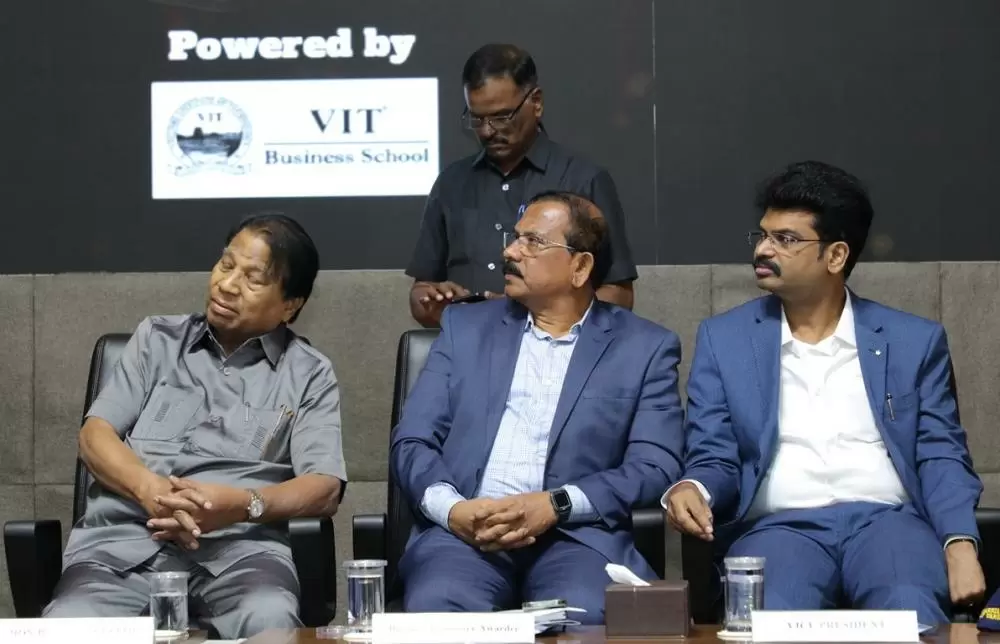
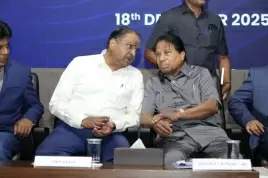
| The conversations provided deep insights into India’s growth model and kept the dignitaries on the dais engrossed |
Service and dreams
Accepting the Lifetime Achievement Award, Brigadier B. K. Ponwar, the long-serving former Director of the Counter Terrorism and Jungle Warfare College (CTJWC), reflected on his 54 years of uniformed service. “We created not just a college, but a battlefield to manufacture warriors,” he said.
Receiving the Business Luminary Award, Ma Foi K. Pandiarajan said, “Through our organisations, we have had the privilege of creating careers for close to five to ten lakh young people.”
Quoting Eleanor Roosevelt, he told students, “The future belongs to those who believe in the beauty of their dreams.”
- 0
-

-

-

-


Trending Now: