When Two Doctors Chose a Forgotten Valley, They Helped an Entire Community Rise to Its Feet
01-December-2025
Vol 16 | Issue 49
Around thirty years ago, two young doctors chose a path few would dare. They left behind the comfort of city life and promising medical careers to live among one of Tamil Nadu’s most underserved tribal communities, deep within the Sittilingi Valley in Dharmapuri district, around 90 km from Salem, the nearest major town.
It wasn’t just a career move, but the beginning of a quiet revolution in rural healthcare.
For Dr Regi and Dr Lalitha, life took on a new meaning while they were working at Gandhigram Hospital near Madurai, after they were devastated to see a child die of dehydration right outside the hospital gate. They realised that people are dying in India not because of illness itself, but due to lack of awareness, timely treatment, and quick access to medical care.
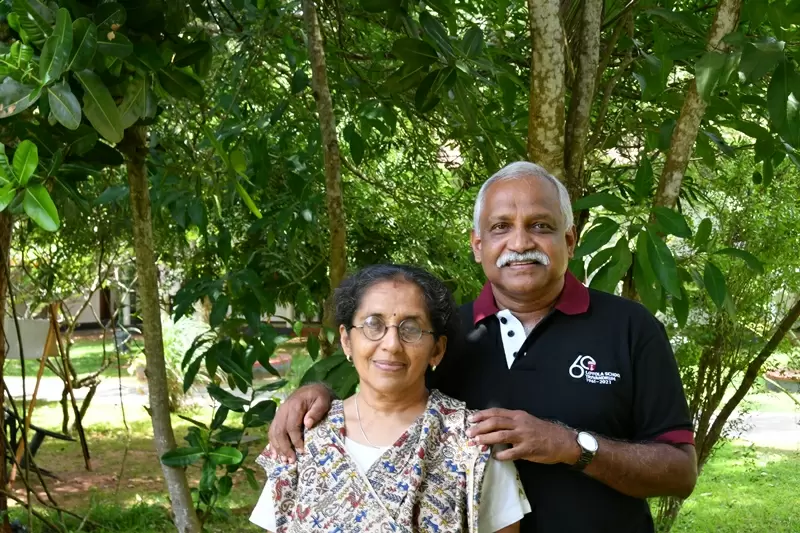
| Dr Regi and Dr Lalitha chose to live in Sittilingi Valley, sharing the same challenges as the tribal families they serve, around three decades ago (Photos: Special Arrangement) |
Driven by that realisation, they set off on a year-long “Bharat Brahman,” travelling across India to find where they were most needed. After months of research, they chose to serve the tribal community in Sittilingi Valley.
It was one of Tamil Nadu’s most underserved tribal areas. Back in the early 1990s, there were no proper roads, no doctor living within 50 km, and the nearest hospital was nearly 100 km away. Infant and maternal deaths were high, and so was malnutrition.

Dr Regi and Dr Lalitha quit their jobs and shifted to Sittilingi. In 1993, they started The Health Initiative (THI) from a mud-and-thatched hut, offering basic outpatient services.
Three years later, with financial support from friends and a few grants, the hut grew into a 10-bed hospital that has never stopped expanding.
THI has now expanded to the nearby Kalvarayan Hills. The hospital caters to about one lakh people within a 50 km radius.
Being located at the border of five districts, it is the only speciality hospital in the region with extensive surgical and obstetric services, drawing tribal patients from the surrounding areas.
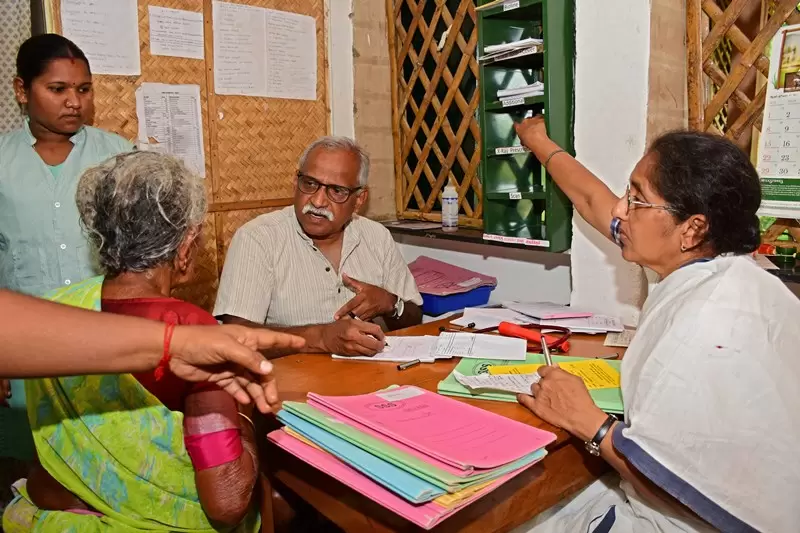
| Dr Regi and Dr Lalitha examining patients at the OPD in Sittilingi, where thousands now receive medical care |
THI’s community development programmes focus on about 42 villages and nearly 17,000 people. Today, THI has become a 35-bed multi-speciality hospital that serves nearly one lakh tribal people across five surrounding districts.
They rarely need to refer patients to bigger cities, as the Sittilingi hospital is equipped with everything from ICU care, surgeries and deliveries to ECG, sonography and X-ray services, with a blood bank recently added.
They began training tribal girls as health workers so that the community could take care of its own health needs. These women now manage most of the hospital’s daily work, treating common illnesses, assisting doctors in the operating theatre, and helping with deliveries.
“My learning is that if you work with the community that is the only way to improve health,” says Dr Regi. “The project is still an on-going experiment and the joy it gives in discovering new ways of intervention is a great feeling.”
The couple’s efforts have made a remarkable impact over the past 33 years since the health facility began in a thatched hut. There have been no maternal deaths recorded in the last 15 years.
When they arrived, acceptance was not immediate. “Many of the people didn’t believe that we were doctors,” recalls Dr Regi. “But once they started coming for treatment, there was no need to persuade them. We gained their confidence through health work.
“As we started tackling more and more emergencies and saving more and more lives, the confidence in us by the community increased.”
Born in Kerala, the couple were batchmates at Government Medical College, Alappuzha, graduating in 1983. They later pursued post-graduation at Gandhigram Rural Institute near Madurai, in a campus that was rooted in Gandhian philosophy.
Regi specialised in Anaesthesia, and Lalitha in Gynaecology. Their families supported their unconventional path. “They thought that you should do what gives you joy and satisfaction,” says Dr Regi.
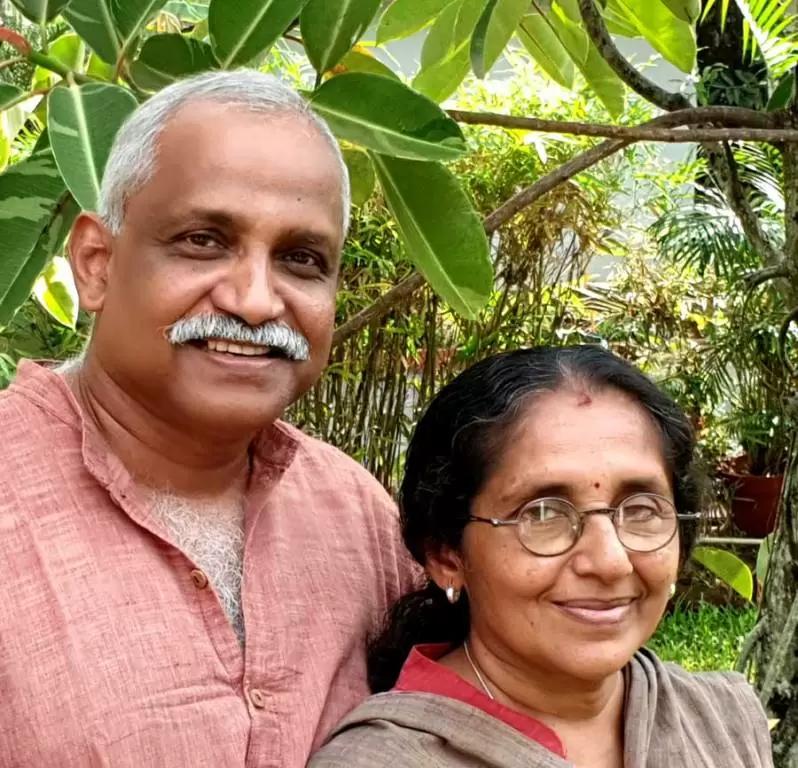
| THI is now a 35-bed hospital with ICU, X-ray, sonography, and a new blood bank serving five districts |
Living in a remote tribal village, without electricity or roads, was not a sacrifice for them. It was essential. “We settled in Sittilingi because we wanted to be part of the tribal community, and we were ready to undergo the same difficulties they had,” he explains.
“Otherwise, we could have stayed in a nearby non-tribal village or a nearby town. But then that would not have invoked the confidence of the community.”
While expanding the health facility, they realised that self-reliance and livelihood opportunities were equally essential for improving health.
Recognising that economic empowerment is central to wellbeing, the couple helped revive organic farming in the region by working with four farmers who were willing to join the experiment.
When floods later destroyed neighbouring chemical farms but spared the organic fields, the entire valley began to shift to organic farming. Today, more than 700 farmers are part of the Sittilingi Organic Farmers Association, generating an annual turnover of Rs 2 crore and achieving food security for their families.
Women found confidence and income through small groups making flour and snacks. These micro-enterprises have now grown to 480 women across 45 groups, supported by a Rs 2 crore revolving fund, enabling many to educate their children in college.
In the fields, Lalitha also noticed tribal women skilled in traditional Lambadi embroidery. She helped revive the art under a cooperative called Porgai - meaning “pride” in Tamil.
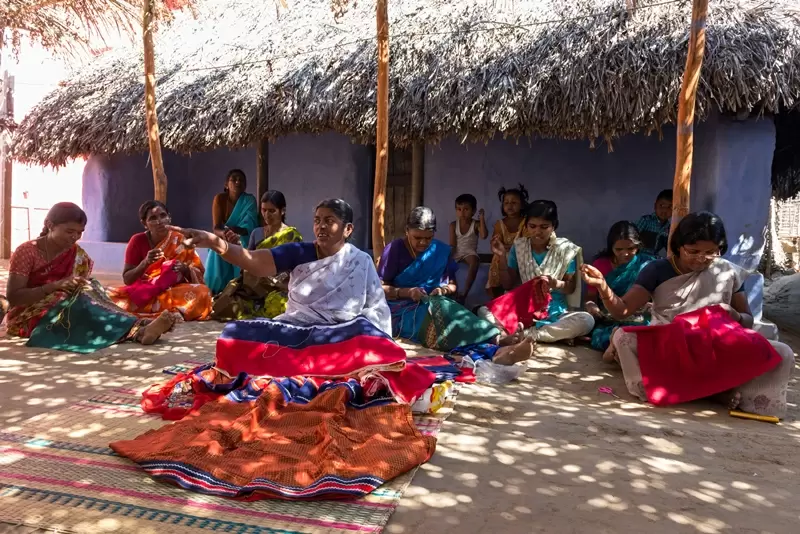
| Porgai artisans practising Lambadi embroidery, a traditional craft now showcased in India’s Parliament building |
Today, Porgai artisans earn a fair income, and their exquisite handcrafted work adorns the new Parliament building and the National Museum of Art. The enterprise has an annual turnover of Rs 80 lakh, of which Rs 40 lakh goes directly into the hands of artisans. Some of their children study design at NIFT Chennai, forging a new path forward.
Water scarcity once made farming unpredictable in the valley. Learning watershed management from farmers in Maharashtra, the couple supported the building of check dams and recharge wells. In just a few years, groundwater rose by 10-15 feet. Now farmers grow two crops a year, doubling their income.
But development also required governance that worked. Dr Regi and Dr Lalitha encouraged villagers to contest Panchayat elections following Gandhian principles - no bribes, no alcohol, no personal attacks.
A nurse from the hospital eventually won, and the transformation was immediate. Villages that had waited 75 years for basics finally received roads and electricity. Drinking water systems revived. Schools and Anganwadis began functioning regularly.
The change has been deep and generational. What began as a two-person effort has evolved into a strong institution with 10 doctors, including six specialists, 40 nurses and health workers, eight paramedical staff, 10 support staff, and six community workers.
Solar power keeps street lights and water pumping systems running, and even the ambulance is a customised jeep - the most reliable vehicle to navigate the rugged terrain.
They also host medical students and international volunteers for rural training, a model where gestures, new friendships, and a little bit of knowledge of Tamil are enough to serve the patients.
Over 33 years, Dr Regi and Dr Lalitha have not only improved health indicators but dignity, self-belief, and opportunity. THI has now expanded their model to the Kalvarayan Hills in Kallakurichi district, located about 70–80 km from Kallakurichi town.
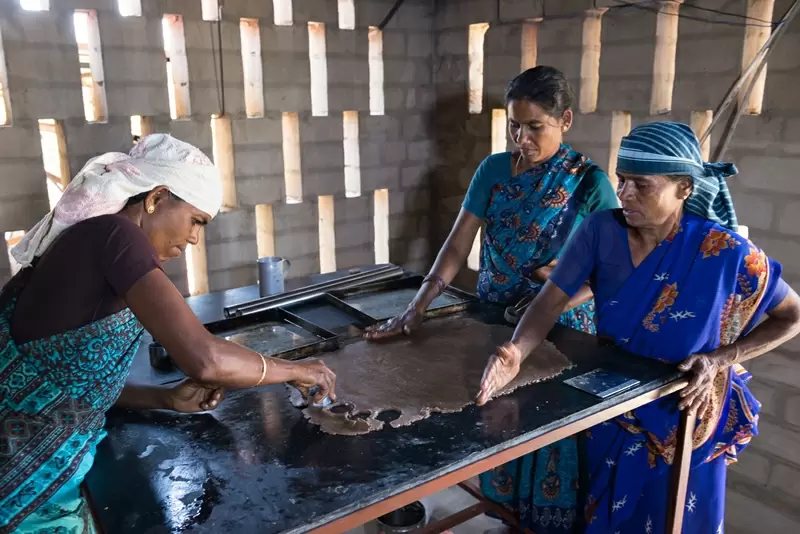
| Tribal women preparing millet cookies, a part of the women-led micro-enterprises that support 480 families in Sittilingi |
A temporary OPD has already been running there for several years, and a permanent facility will begin operations in a couple of months. “We are both majorly looking after the administrative as well as community development work,” says Dr Regi.
From a mud hut to a thriving community movement, their story is proof that true healthcare begins with belonging. They did not just come to treat patients. They came to stay, to listen, and to rebuild what poverty had taken away.
They did not just save lives.
They helped a community discover its strength.
- 0
-

-

-

-


Trending Now: